Pangea.app
The first AI-native staffing and recruiting platform, focused on fractional creative, marketing, and growth talent. Built from a Brown dorm room through Y Combinator to profitability.
AI-native matching engine
The core of the platform: an agentic system that takes a job brief and surfaces the right talent across the network — accounting for skills, time zone, rate, history, and the soft signals that don't fit on a resume.
Ops agents in production
A growing series of internal agents that run the unsexy work — sourcing, screening, follow-ups, contract drafting, payment reconciliation — so humans focus on the few decisions that actually move the marketplace.
Operator console for the marketplace
Internal admin surface for triaging jobs, intervening on matches, monitoring contracts and disputes, and watching the funnel in real time. The control room behind the marketplace.
dbt · BigQuery · reverse ETL
I built the entire data engineering stack personally — dbt transformations, BigQuery as the warehouse, and reverse ETL pipelines that push activated data back into the tools that run growth and ops.
Hundreds of n8n flows
The marketplace runs on a deep n8n automation layer — every repeatable operator task, every notification, every cross-system handoff. If we did it twice, we automated it the third time.
Native contracting + payouts
Contracts and payments live inside the platform — start to scope to invoice to payout. Cross-border by default; 150+ countries served.
75K+ vetted creatives
A global network of fractional creative, marketing, and growth talent — built over seven years from a college dorm to a profitable global marketplace.
CEO + engineer hybrid
It's a different kind of CEO role: customer calls and service issues in the morning, code review and shipping new features in the afternoon, alongside the engineering team.
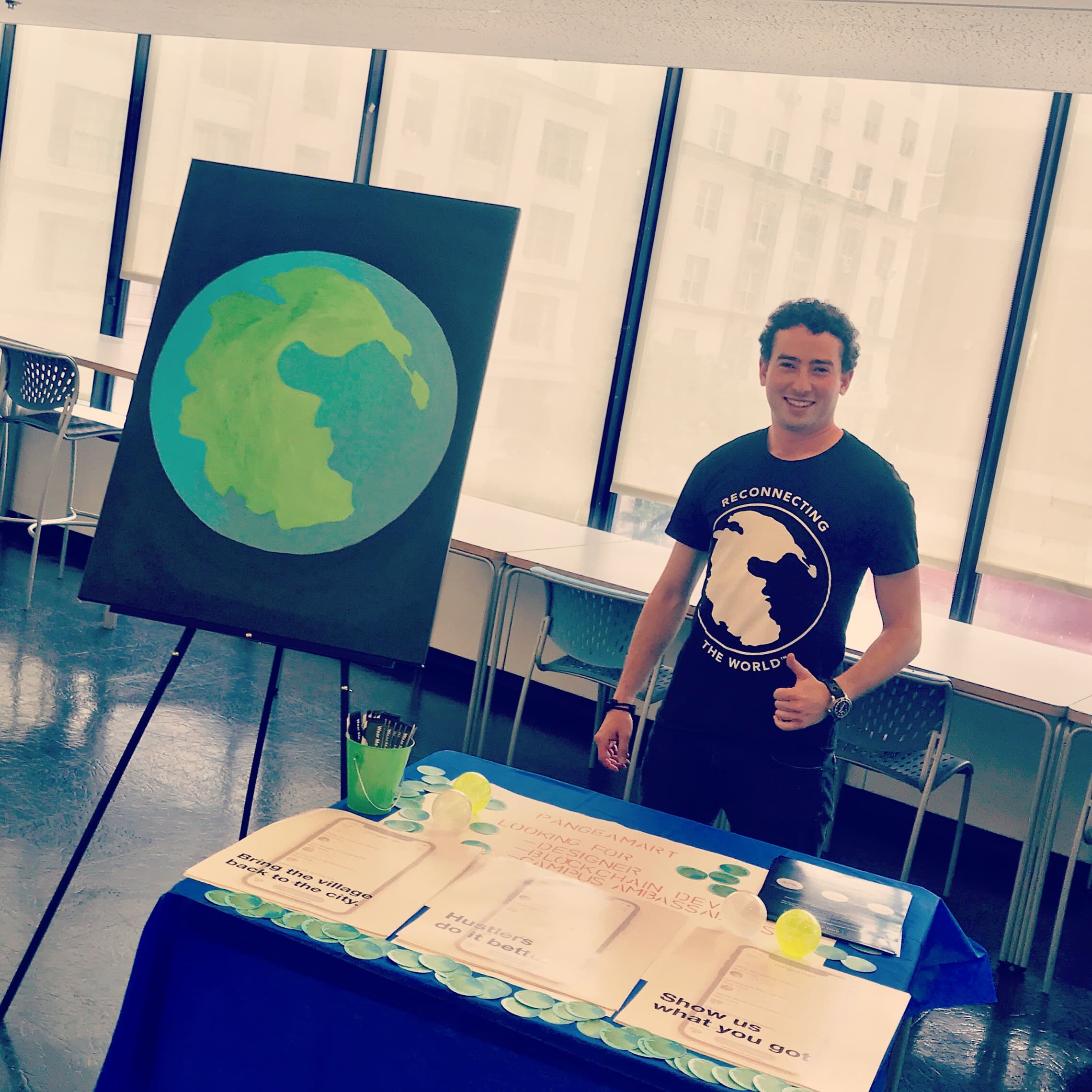 Pangea.app · 2017 — Now
The problem
Hiring is still very broken. But one thing that makes humans unique as a species is our ability to form teams, collaborate, and work together — it goes back to our foundational evolution. I wanted to make it easier to create opportunities for people to work together, particularly in creative, marketing, and growth fields.
The old model — join a company, stay for 20 or 30 or 40 years — has gone away for most people. Right now, I personally run three different projects with nine active work streams across them. People can get a lot more done in a lot less time, and that's why fractional work is rising. Great teams build great products. If we can help assemble great teams, we can enable more great products to exist in the world.
The journey
Pangea's evolution mirrors my own — learning to hire well, learning to build, and ultimately wanting to work on multiple things at once. We went from a college-focused mobile app to a professional fractional marketplace, and from handing out rubber ducks on campuses to working with companies hiring experienced AI-native talent across 150+ countries.
Each phase forced us to rethink what we were building. The constant through all of it was the same conviction: the way people find and form teams is changing, and there should be a platform designed for how work actually happens now.
The agentic matching system
The piece I'm proudest of is the matching engine — an AI-native system that takes a job brief from a company and runs it against the network with both a structured and a semantic pass. It's not a search box dressed up as AI; it's a real agentic loop that reasons about who in the network actually fits, surfaces a small short-list with rationale, and learns from the human-in-the-loop accept/reject signal.
The reason it works is that we built it on top of seven years of marketplace data. The matching agent sees not just a profile, but a history — what someone has shipped, who they've worked with, how they showed up, how they got rated. The next generation of staffing is going to be built on signals like these, and very few companies have them.
Internal AI agents for operations
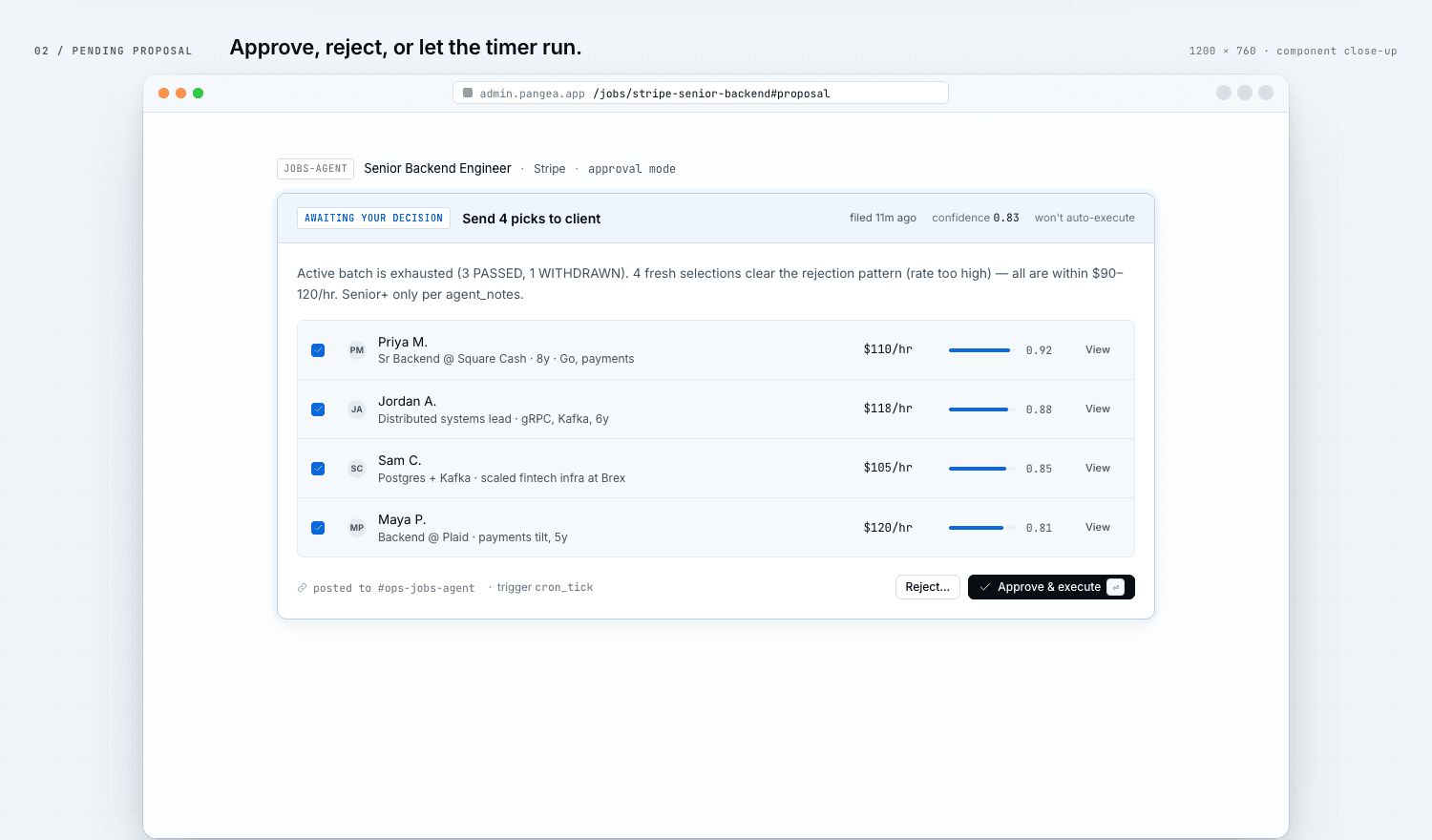
Around the matching engine sits a series of internal agents that run the operations layer of the marketplace — sourcing, screening, contract drafting, payment reconciliation, follow-ups, dispute triage. Each one is a small, focused system that automates a previously human-shaped workflow and reports back to the operator console.
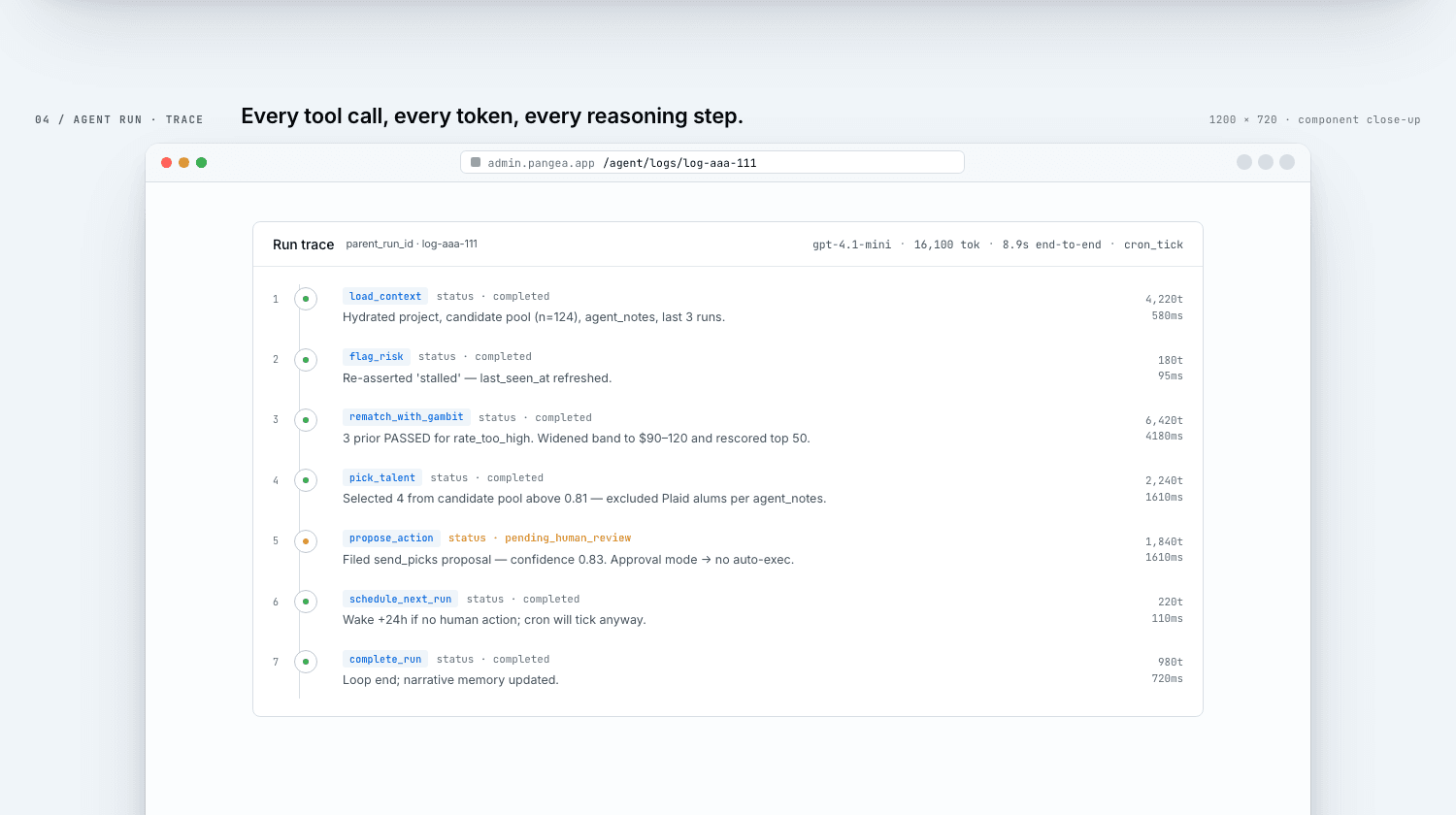
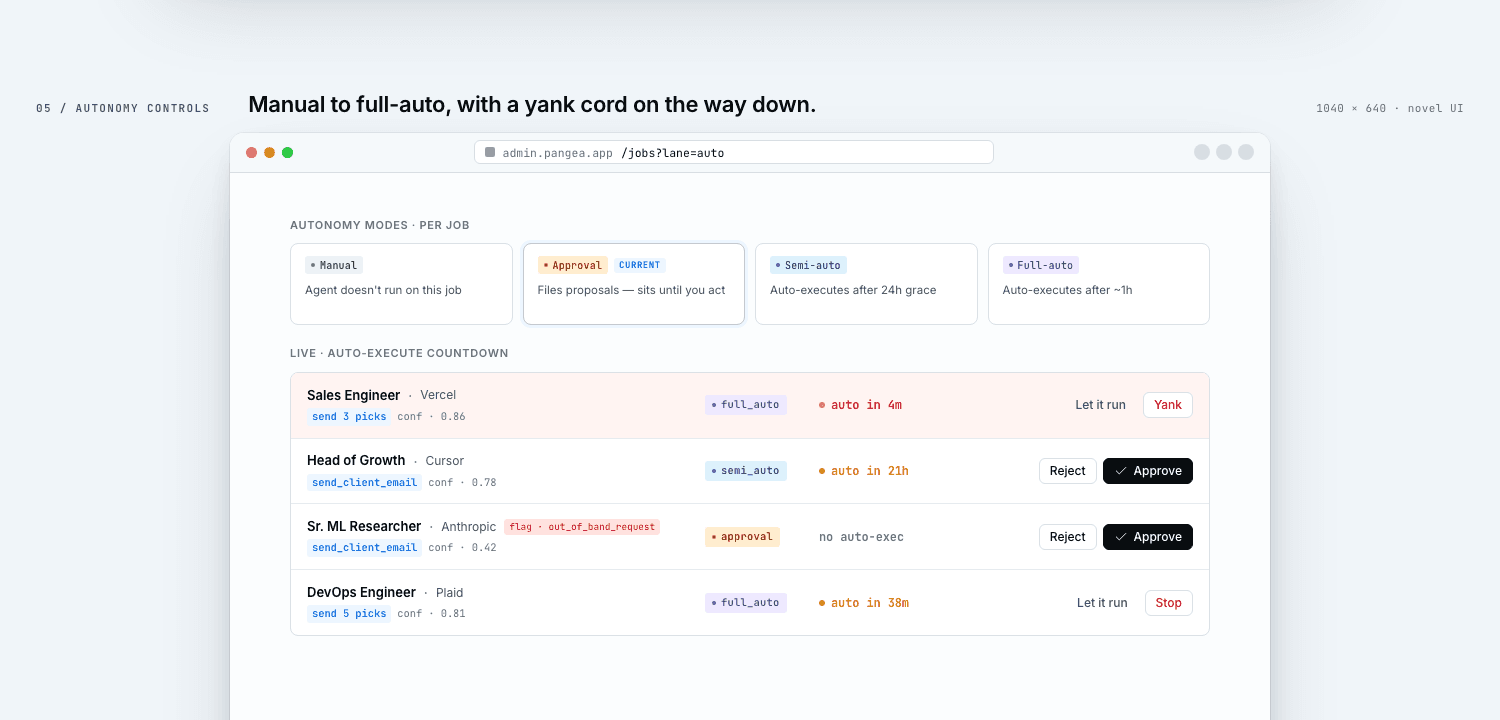
Every run is fully traced: each tool call, each token, each reasoning step is captured against a parent_run_id so an operator can audit exactly what an agent did, why, and how much it cost. Autonomy is per-job and graduated — Manual → Approval → Semi-auto → Full-auto — with a yank cord on the way down for jobs that drift.
The thesis is straightforward: the next decade of staffing platforms will be defined by how much of the coordination work the platform can absorb without losing trust. We're building toward a marketplace that runs itself for the high-volume cases and surfaces only the calls that genuinely need a human.
The admin panel
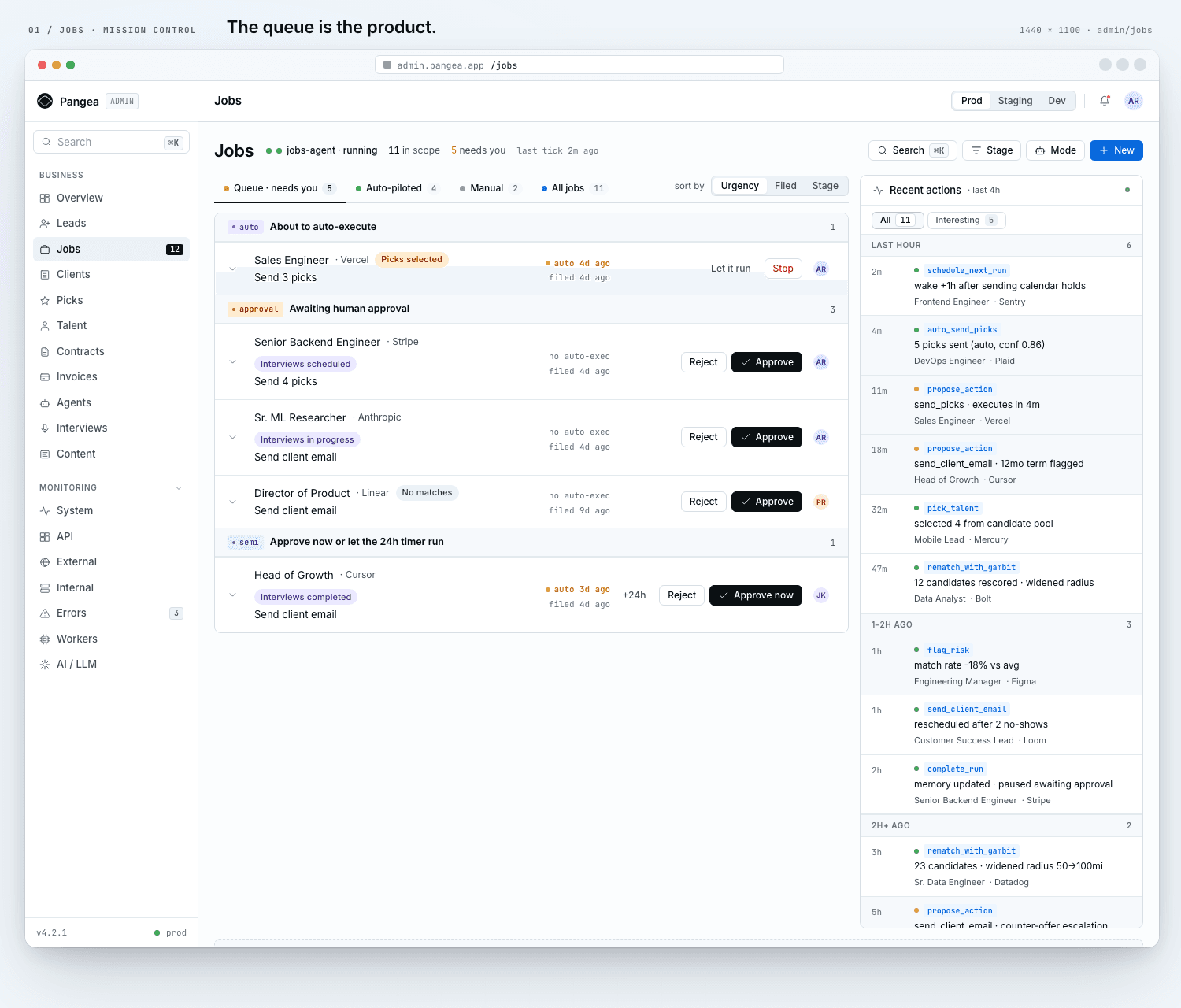
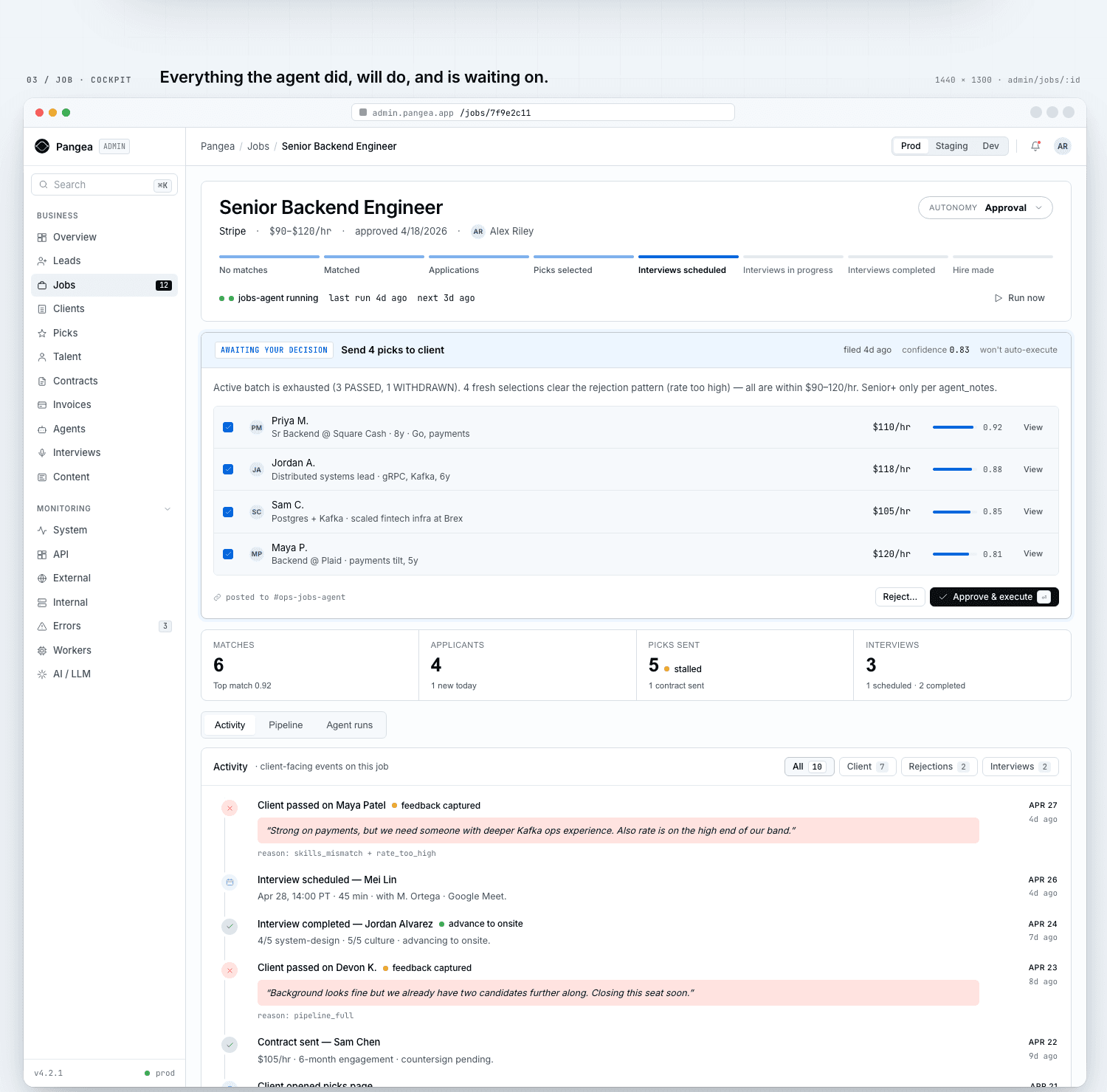
Behind the consumer-facing marketplace is an internal admin surface that lets the operations team intervene on any part of the funnel — re-route matches, override agent decisions, monitor active contracts and payments, watch funnel health in real time, and run targeted campaigns against the talent network.
The hero of the admin is Mission Control: a single queue surfacing every job that needs you (proposals filed, escalations, things the agent flagged) alongside a live rail of recent agent actions. The cockpit page for any one job collapses everything an agent did, will do, and is waiting on into a single scroll — pipeline at the top, decisions in the middle, narrative activity at the bottom.
It's the control room. Most of the marketplace runs without it — but when something breaks, when a customer needs intervention, when an experiment needs to be cut over, this is where it happens.
Data infrastructure
I built out our entire data engineering architecture personally — dbt transformations, BigQuery warehousing, and reverse ETL pipelines that activate our data for marketing workflows. On top of that, hundreds of n8n automations keep the marketplace running.
Now, with my technical abilities continuing to grow, I'm pushing new code and features directly to production. It's a different kind of CEO role — talking to customers and managing service issues in the morning, shipping code in the afternoon.
What I actually did
Everything. I own the P&L, led fundraising, and set the strategic direction. But what makes my role unusual is how hands-on it's stayed. I've built the data infrastructure, managed customer relationships directly, developed the automation layer, designed the agent systems, and now I'm shipping production code alongside the engineering team.
The agent-managed marketplace, from the operator's seat
Pangea's admin tooling for an AI-run talent marketplace — where a fleet of long-running agents proposes picks, drafts client emails, and advances jobs through every stage. Operators stay in the loop only when it matters.